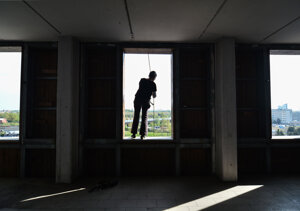
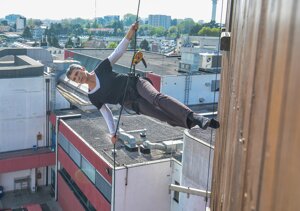
Vertical Dance Routes © Wanda Moretti 2020

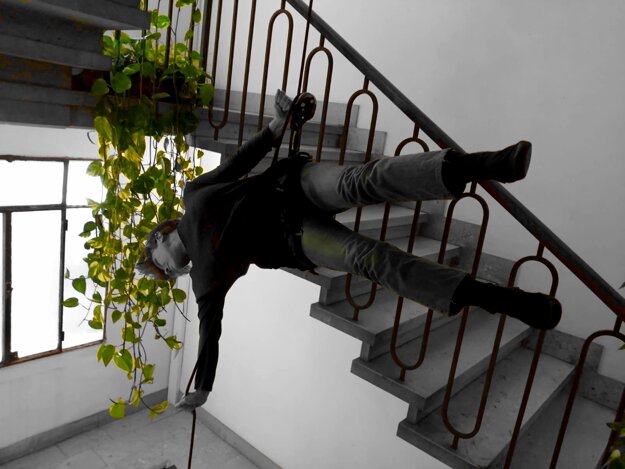
Wanda Moretti.
I am a choreographer and researcher; I have focused my study of dance on the systems of proportion and harmony in space. A pioneer of vertical dance in the 1990s, after studying contemporary dance, I began experimenting with the vertical plane as a self-taught artist, seeking to develop my own movement language.
I lifted my feet off the ground and began to perceive places differently. Later, I developed a specific method and created performances in which space and movement merge into a single scene.
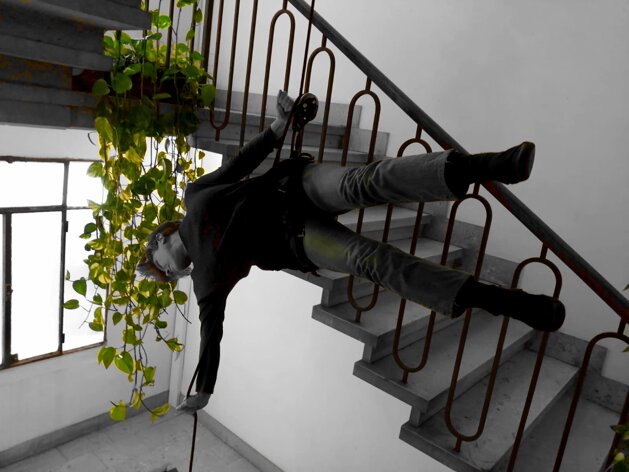
In particular, my research explores the relationship between dance, architecture, and landscape; dance adapts to any vertical environment and interacts with it; dancing on architectural structures adds a dimension that integrates the space itself.
Today, I continue my exploration of places and their influences on human movement. I create performances for the Il Posto Company, founded in Venice with musician Marco Castelli, which are presented at many festivals and numerous international events.
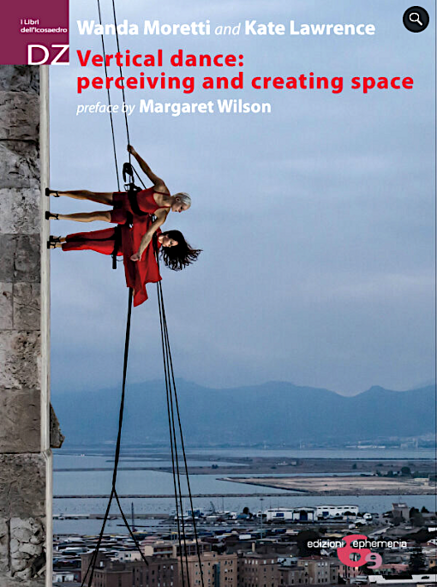
Vertical Dance: perceiving and creating space
“Vertical Dance: perceiving and creating space” defines the substance and methods of vertical dance. Moretti and Lawrence reflect on the state of the art at the end of a pioneering experimental era and the dawn of a new period in which emerging artists are developing the form creatively and in which, concurrently, it is being regulated and institutionalized. The authors begin by clarifying what is meant by the term ‘vertical dance’, discussing the component parts and why these are fundamental to the classification of this nascent form and go on to discuss the boundaries with its close relatives: aerial dance, site-specific artistic practices and climbing. They then chart the history of the form and examine its potential to challenge and enhance our experience of space.
Authors
Wanda Moretti, a choreographer and researcher, her dance studies focus on systems of proportion and the harmony of space. She has pioneered vertical dance in Italy since the 1990s, developing and spreading this practice to create VST (Vertical and Suspension Training), a method now internationally recognized. Her research and artistic project concerns the relationship with architecture and landscape and how every movement performed in space derives from the relationship between the movement itself and the specific point on the wall to which the moving rope is attached. In 1994, in Venice, she founded Il Posto Company with the composer and musician Marco Castelli.
Kate Lawrence, is a choreographer and researcher specialising in vertical dance and site-specific performance practices. In the 1990s she ran feminist dance company Nomads, with whom she made 3 touring shows. Since then she has lectured in dance and performance at Bangor University and University of Surrey where she pioneered a vertical dance undergraduate module (2003 – 2010), fusing her dance background with her long-standing passion for rock climbing. Kate began making vertical dance work in 2002, and in 2014, after moving to North Wales, she founded the company Vertical Dance Kate Lawrence with her partner and rigger Simon Edwards. Her choreographic work is highly collaborative and explores the nexus of site, body and context. She completed the first PhD examining vertical dance in 2017.
buy the book here:
Digital:
Vertical dance: perceiving and creating space: preface by Margaret Wilson (I libri dell'icosaedro Book 1) (English Edition) https://amzn.eu/d/02eKhAf
Hard copy which was already available on many sites anyway, here is the Amazon link:
Vertical Dance: perceiving and creating space. New edition https://amzn.eu/d/cSUX4FO